
No products in the cart.
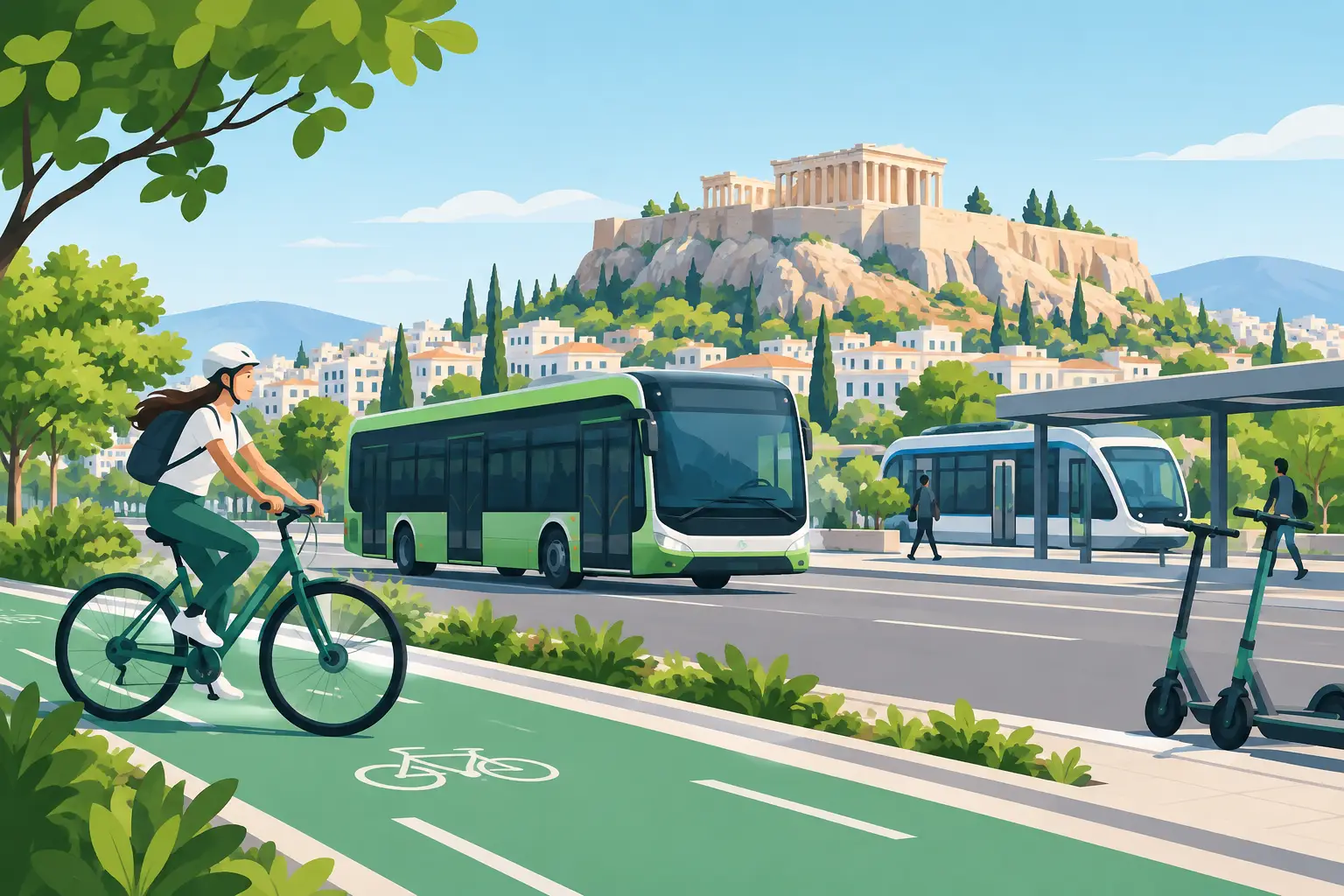
Sustainable Transport for Smarter Athens Travel
A smoother arrival in Athens can begin before your flight lands. When transportation is arranged around your itinerary, passenger count, and luggage, there is less waiting at the curb, fewer unnecessary journeys, and more time to enjoy Greece. That is the practical value of sustainable transport: making each mile work harder while protecting the comfort, safety, and reliability travelers expect.
For visitors, sustainability does not have to mean giving up a private, premium experience. It can mean choosing the right vehicle instead of an oversized one, combining journeys sensibly, walking where Athens is best explored on foot, and working with transport professionals who plan routes with care. The most responsible trip is often the one that is well organized from the beginning.
What Sustainable Transport Means for Travelers
Sustainable transport is commonly associated with electric vehicles, public transit, cycling, and walking. All of these matter. But for a family arriving at Athens International Airport after a long flight, or a business traveler heading directly to a meeting, the definition should also include efficient planning, vehicle occupancy, and avoiding duplicate transfers.
A nearly empty large vehicle uses more resources than a properly sized sedan or minivan. Two separate airport pickups for members of the same group can create unnecessary mileage when one coordinated pickup would do. A driver who understands local traffic patterns can avoid long periods of idling in congested areas. These choices may seem small, but they add up across a stay in Athens or a multi-stop trip around Greece.
Sustainability also has a human side. Comfortable, dependable transportation encourages travelers to use their time well, arrive safely, and avoid last-minute decisions that can lead to extra trips. A thoughtful plan should reduce stress as well as environmental impact.
Start With the Right Vehicle and the Right Group Size
Vehicle choice is one of the simplest ways to make private transportation more efficient. A couple with carry-on bags may be best served by a premium sedan. A family with strollers, several suitcases, or young children may need a minivan. For larger parties, one luxury minivan or minibus is usually a more sensible option than several separate cars.
The key is to book for the people and luggage actually traveling. Oversizing “just in case” is not always necessary, while choosing too small a vehicle can result in an extra car or an uncomfortable journey. When booking, share your flight details, accommodation address, group size, luggage count, and any special equipment such as child seats. That allows your transportation provider to recommend a suitable option with confidence.
For groups attending a wedding, conference, cruise departure, or private event, coordinated transfers are especially valuable. A single planned movement for a group of 10 to 20 guests can reduce traffic around the venue and make arrivals far easier to manage. It also gives guests the reassurance of a professional driver and a clear meeting point.
Use Athens at Its Best: On Foot, by Metro, and by Car When Needed
Athens rewards travelers who combine transportation methods. The historic center is wonderfully walkable in many areas, especially between the Acropolis, Plaka, Monastiraki, Syntagma, and nearby museums. Walking is not only low-impact; it often reveals the cafés, courtyards, shops, and views that are missed from behind a car window.
The Metro can be a practical choice for some city journeys, particularly when stations are close to both your starting point and destination. It is often useful for independent travelers with light luggage and flexible schedules. However, it may not be the best fit after a late flight, when traveling with children, carrying several bags, or arriving at accommodation on a street with limited access.
That is where a pre-booked private transfer has a clear role. Door-to-door service can prevent multiple connections, reduce confusion in an unfamiliar city, and provide a direct ride at the time you need it. The goal is not to use a car for every short journey. It is to use one purposefully, when its safety, convenience, and direct routing offer the better overall result.
Plan Airport Transfers to Avoid Unnecessary Miles
Airport transportation is often the first and last road journey of a Greek vacation. A little advance planning can make it more efficient and much more relaxing.
First, schedule one pickup for your whole party whenever possible. If travelers are arriving on different flights, consider whether a short wait allows them to travel together, provided it does not make anyone uncomfortable after a long journey. For a family or small group, this can be simpler than arranging multiple cars and coordinating several arrival times.
Second, provide accurate flight information. A professional transfer service can monitor timing and prepare for a delayed arrival, helping to avoid rushed communication and backup transportation arrangements. Third, build a realistic itinerary. Trying to fit the airport, hotel check-in, a lunch reservation, and an excursion into an overly tight schedule often creates avoidable driving and stress.
For travelers who value personal attention, Georgopoulos Transfers Athens can help match airport and city transportation to the group, timing, and luggage needs of each booking. Clear arrangements before arrival make the journey feel more welcoming from the first moment.
Choose Cleaner Technology Without Making Empty Promises
Electric and hybrid vehicles have an important place in the future of transport, particularly for city driving where lower local emissions and quieter operation can improve the urban experience. As fleets evolve, travelers can reasonably ask what vehicle options are available and how providers maintain them.
Still, cleaner travel is not only about the badge on the vehicle. An electric vehicle that requires an impractical detour to charge may not always be the most efficient choice for a long-distance itinerary. A modern, well-maintained conventional or hybrid vehicle that carries a full group directly and avoids extra trips can be a sensible option. The best answer depends on distance, charging availability, passenger needs, road conditions, and the number of people traveling together.
Rather than looking for perfect claims, look for responsible habits: clean and properly maintained vehicles, route planning, appropriate fleet sizing, and drivers who avoid aggressive or wasteful driving. These operational details are less glamorous than a label, but they have a genuine effect on fuel use and passenger comfort.
Make Day Trips More Thoughtful
Greece invites exploration beyond Athens, from Cape Sounion and the Temple of Poseidon to Delphi, Nafplio, Meteora, and the Peloponnese. Private excursions make these places accessible on your own schedule, but they should be planned with realistic distances in mind.
A well-designed day trip combines nearby experiences rather than zigzagging between distant locations. For example, travelers exploring the Athenian Riviera can pair coastal stops with Cape Sounion instead of returning repeatedly to the city center. Visitors heading toward the Peloponnese can choose a route that groups landmarks in the same direction. Fewer backtracks mean more time enjoying the destination and less time on the road.
It is also worth deciding what kind of day you want. A full itinerary can be rewarding for travelers with limited time, while a slower private trip with fewer stops may suit couples, families, and guests who want to live the moment rather than watch the clock. Sustainable travel is not a contest to see the most places. It is a way of traveling with intention.
Small Guest Choices That Have a Real Effect
Transportation providers carry a large share of the responsibility, but travelers can make practical choices as well. Keep digital confirmations and maps on your phone when convenient, bring a refillable water bottle, and ask your driver to plan reasonable stops rather than frequent unplanned detours. If you are staying in one neighborhood for the day, explore it on foot before requesting another ride.
When you need a vehicle, be ready at the agreed meeting time. Prompt pickups reduce idling and help drivers keep their schedule running efficiently for every guest. If your plans change, communicate as early as possible. This is courteous, but it also helps prevent empty or unnecessary journeys.
Sustainable Transport Should Still Feel Like Hospitality
Travelers should never have to choose between responsible transportation and being well cared for. A clean vehicle, bottled water, a courteous driver, safe child seating, careful luggage handling, and reliable 24/7 communication are part of a quality journey. They are also what make planned transport preferable to a series of uncertain, last-minute rides.
The most meaningful approach is simple: walk when walking adds to the experience, use shared transit when it suits the journey, and choose a properly planned private transfer when comfort, timing, luggage, or safety call for it. With each decision, Athens becomes easier to enjoy, and Greece’s beauty remains the focus of the trip.